
EarlyEdU Courses Remix
EarlyEdU Course Remix!
These courses are new editions of the EarlyEdU coursework, with new pacing, new assignment types, and a new feedback-forward grading model. This newly developed suite of ECE course resources aligns with the WA state and NAEYC ECE professional competencies. They were developed from the original suite of EarlyEdU coursework with additions from the Cultivate Learning Trauma-Informed Care Modules and other training materials. Each course has two discrete 8-session parts focusing on foundations and contexts in Part 1 and application in Part 2.
To access these courses, you'll need to be an EarlyEdU member.
The Developing Child (TDC)
Online
The Developing Child is a two-part series that builds foundational knowledge of child development from birth to age 5 in the context of families and community. It combines research-based theory with reflective, practical application to support responsive early childhood practice.
EarlyEdU origin course: Child Development: Brain Building (CDBB).
TDC Part 1: Foundations & Context
Course Outcomes
- Upon successful completion of this course, learners will be able to:
- Demonstrate knowledge of core concepts of child and brain development.
- Reflect on your own development and apply new ideas to your understanding.
- Create activities and plan interactions to support children’s development.
- Discuss and describe the effect of individual differences and family, program, and socio-cultural contexts on development.
- Develop a developmental resource portfolio for families that supports five protective factors.
TDC Part 2: Observation & Application
Course Outcomes
Upon successful completion of this course, learners will be able to:
- Demonstrate knowledge of brain development and the developmental progressions of children ages birth to 5 in physical, language, social-emotional, and cognitive areas.
- Identify children’s developmental progressions as expressed through their behavior in their environments.
- Identify, create, and revise learning activities and environments for young children.
- Plan adult-child interactions that support children’s developmental progressions in physical, language, social-emotional, and cognitive domains.
- Apply strategies to build positive relationships with and between children and families.
Guiding Child Behavior (GCB)
Online
This two-part series focuses on increasing educators’ knowledge and skill in providing Positive Behavior Support (PBS) as an approach to preventing and addressing challenging behavior in children from birth to age five.
EarlyEdU origin courses: Child Guidance (in-person) and Positive Behavioral Support for Young Children (online).
GCB Part 1: Foundations & Context
Course Outcomes
By the end of this course, learners will be able to:
- Reflect on ways that your own biases and experiences shape how you interpret children’s behavior
- Practice communicating with families in ways that build mutual respect and trust with a focus on positive goals that support a child’s development and learning
- Identify strategies for building positive relationships with children, families, and colleagues
- Identify, evaluate, and plan for learning environments and adult-child interactions that support children’s social relationships, emotional and behavioral health, and self-regulation
- Recognize, plan, and enact evidence-based, systematic social skills teaching strategies that support children’s social and emotional development and prevent and address challenging behaviors
GCB Part 2: Applications
Course Outcomes
By the end of this course, learners will be able to:
- Explain Positive Behavior Support as an approach to addressing challenging behavior
- Assess the form and function of children’s challenging behaviors
- Develop an individual behavior support plan based on observational data
- Plan for ongoing formative assessment of children’s progress
Language and Early Literacy (LEL)
Online
This course is a two-part series about how children’s language and literacy skills develop and how these skills lay a foundation for later reading success. We focus on building the educators’ capacity to respond to the unique needs of children who are multilingual learners, birth to age 5.
EarlyEdU origin courses: Supporting Multilingual Learners and Supporting Language and Literacy Development in Preschool.
LEL Part 1: Foundations and Context
Course Outcome
By the end of this course, learners will be able to:
- Identify strategies you can use to partner with families who speak more than one language
- Describe the cultures and languages represented in your community
- Recognize that there are different ways that young children learn language across content areas and that instructional decisions should be responsive to how children learn
- Analyze and apply knowledge of first and second language development to identify and implement individualized, specific strategies that promote the growth and abilities of children who are multilingual learners, birth to age five
- Demonstrate knowledge of the 5 key areas of preschool language and literacy that are foundational to later reading success Vocabulary, Narrative, Print Knowledge, Phonological Awareness, and Early Writing
LEL Part 2: Applications
Course Outcome
By the end of this course, learners will be able to:
- Explore 3 evidence-based practices for each of the 5 key areas that support children’s language and literacy development in systematic and explicit ways
- Practice observing and identifying the 5 key areas of high-quality language and literacy instruction across a wide variety of preschool classrooms
- Practice planning for and implementing the key practices in their own classroom
- Reflect on their own practice and receive feedback from their instructor and peers
- Create a plan for improvement based on feedback, reflection, and in response to individual needs of children
Health, Safety, and Professional Practice (HSPP)
Online
This two-part course establishes a foundation of the early childhood educator’s own resilience and wellness and leadership as fundamental to creating healthy, safe, and nourishing environments for children.
EarlyEdU origin courses: Resilience and Wellness for Educators, Learning Leaders in Early Childhood Education, and Children’s Health and Well-being.
HSPP Part 1: Foundations & Context
Course Outcome
Upon successful completion of this course, learners will be able to:
- Recognize the components of optimal health and possible concerns in early childhood.
- Identify and plan effective strategies to support health, safety, nutrition, and well-being.
- Describe why "teaching from the inside out" is critical to becoming a resilient, effective educator.
- Practice a variety of resilience skills in different aspects of your life, including mindfulness, managing intense emotions, clarifying and committing to your personal values, and identifying and altering unhelpful thoughts.
- Explain the benefits of resilience and how the specific skills translate into optimizing social-emotional well-being and function as a more effective educator.
HSPP Part 2: Application
Course Outcome
Upon successful completion of this course, learners will be able to:
- Plan, enact, and improve practices to support health and well-being in your program.
- Reflect on your core values, vision, strengths, and development of your identity as a leader.
- Name and describe key characteristics and skills of strong leadership that optimize child health, development and learning to achieve greater impact.
- Apply your knowledge of the 5Rs for Learning Leaders to the design of effective professional development experiences that include goals and reflection on progress and your resilience.
- Analyze the social, political, and historical context surrounding the early childhood education profession to be an informed decision-maker and advocate for staff, children, and families.
Observation, Assessment, and Curriculum (OAC)
Online
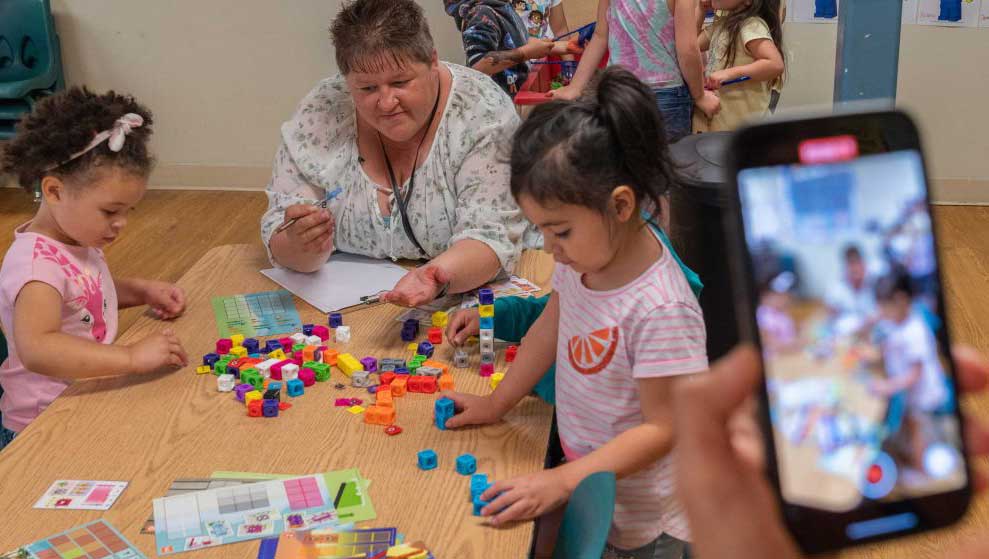
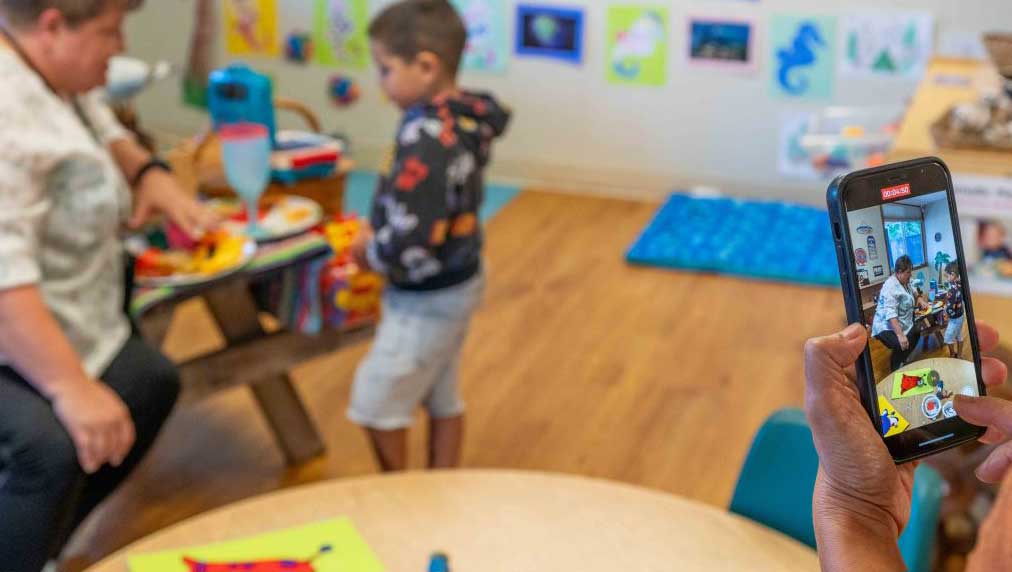
This two part course integrates Observation, Assessment, and Curriculum into a cohesive learning sequence. Participants will learn how to plan and implement effective systems of ongoing observation and assessment for children from birth to age five, and how to use child-level and group-level data to design, adapt, and improve curriculum and teaching practices.
EarlyEdU origin course: Child Observation and Assessment.
OAC Part 1: Foundations and Context
Course Outcome
Upon successful completion of this course, learners will be able to:
- Observe children objectively and document observations in effective ways.
- Describe the various purposes of assessment.
- Demonstrate appropriate selection and use of screening tools as well as ongoing child observation and assessment strategies.
- Demonstrate cooperative work with families and colleagues to gather observation and assessment information, and explain the purpose, process, and results of assessments to families.
- Demonstrate the ability to collect and record child assessment data, chart the progress of a group of children toward standards, and analyze results.
OAC Part 2: Applications
Course Outcome
Upon successful completion of this course, learners will be able to:
- Show an understanding of using assessment measures to set goals and plan effective programs, environments, and interactions.
- Use screening and assessment data systematically to improve teaching practices, communicate children’s progress to families, and optimize children’s learning.
- Modify and use screening, observation and assessment strategies to support all children including children with disabilities or suspected delays or children who are multilingual.
- Use ongoing assessment data to inform and adapt curriculum experiences and activities that are developmentally, linguistically, and culturally appropriate.
- Demonstrate the ability to aggregate, analyze, and share child level data with various audiences (families, colleagues, multidisciplinary teams etc.).